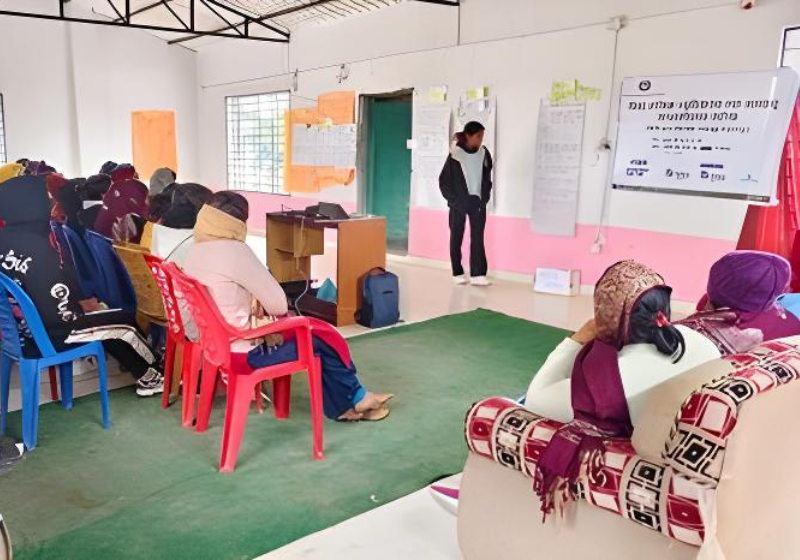
How one young woman is making her community disaster-resilient
a community at risk
Shuklaphanta Municipality in Nepal faces serious and recurring natural hazards including flooding, fire, extreme heat, and erratic rainfall. Each year, flooding alone destroys at least 50,000 square metres of land in the municipality. Yet despite these risks, many residents have had little to no knowledge about disaster preparedness and safe practices.
This is not uncommon in Nepal. The Terai region, where Shuklaphanta is located, is among the country’s most flood-prone areas. During the 2017 monsoon season alone, flooding across Nepal’s southern Terai plains affected an estimated 450,000 people, destroyed over 41,000 houses, and damaged more than 126,000 hectares of paddy. Climate change is making these events more frequent and more severe.
Research has consistently found that knowledge gaps in disaster risk reduction (DRR) remain significant in high-risk communities, and that closing those gaps, particularly among young people, is one of the most effective ways to build lasting community resilience.
from participant to community leader
Sakina is a young woman from Shuklaphanta who, like many of her neighbours, had limited knowledge about disaster risk reduction and climate resilience. That changed when she had the opportunity to participate in a two-day training on disaster risk reduction and climate resilience targeted at youth.
During the training, Sakina gained practical knowledge about disaster risk, preparedness measures, safe behaviours, the impacts of climate change, and resilient practices that can be adopted at the community level.
The impact was immediate. After the training, Sakina’s thinking and behaviour changed significantly. She began making practical changes in her own household such as paying closer attention to fire risk, reviewing household items, and teaching her family members about risks and how to mitigate them.
ripples through the community
Sakina did not stop at her front door. With a growing sense of responsibility towards her community, she gathered youth, women’s groups, and neighbours and began sharing information on disaster preparedness, safe shelter, first aid, and climate resilience practices.
Her initiative opened discussion in a community that had previously been dealing with disasters without a clear plan or shared knowledge base. Awareness about the risks began to spread. Mutual co-operation and vigilance increased. And critically, Sakina’s leadership helped embolden other youth and women to take charge.
This kind of community-level ripple effect is well documented. Research on disaster resilience in Nepal has found that communities with active local organisations, such as youth clubs and women’s groups, tend to score higher on social and institutional resilience measures. Youth have been shown to play a key role in relaying disaster preparedness information to their families and wider communities.
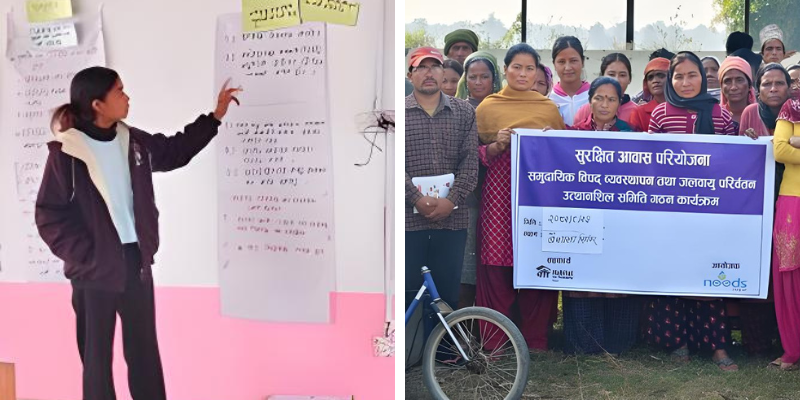
the power of investing in youth
Sakina’s story is a reminder of what becomes possible when young people are equipped with knowledge and given the opportunity to act on it.
As she puts it: “This training has not only inspired me, but also my community to be safe and vigilant. Now I have the confidence to teach others what I have learned.”
It is an important lesson. Even a modest investment such as a two-day training can initiate lasting change. It makes a significant contribution to making communities vigilant, disaster-resistant, and climate resilient. And in a place like Shuklaphanta, where the risks are real and recurring, that knowledge can make all the difference.
These projects receive support from the Australian Government through the Australian NGO Cooperation Program (ANCP) and are in partnership with our implementing partner Habitat for Humanity Cambodia.