From fragile to strong: changing lives in Vietnam
Building climate resilience, one home at a time
Across Vietnam, millions of families live in homes that cannot withstand the floods, storms and extreme weather that climate change is making more frequent and more severe. For ethnic minority communities in the remote highlands of Lao Cai province the risks are especially acute, and the resources to respond are especially limited.
Our Climate Resilience Project is helping vulnerable communities in Vietnam build safer, stronger futures. By improving access to resilient housing, clean water, community-led solutions, and advocacy for lasting change, we are empowering families to better withstand the growing impacts of climate change and recover more quickly when disasters strike.
Behind every project statistic is a family. Here are two of their stories.
A home built on hope: housing repairs providing security for the future
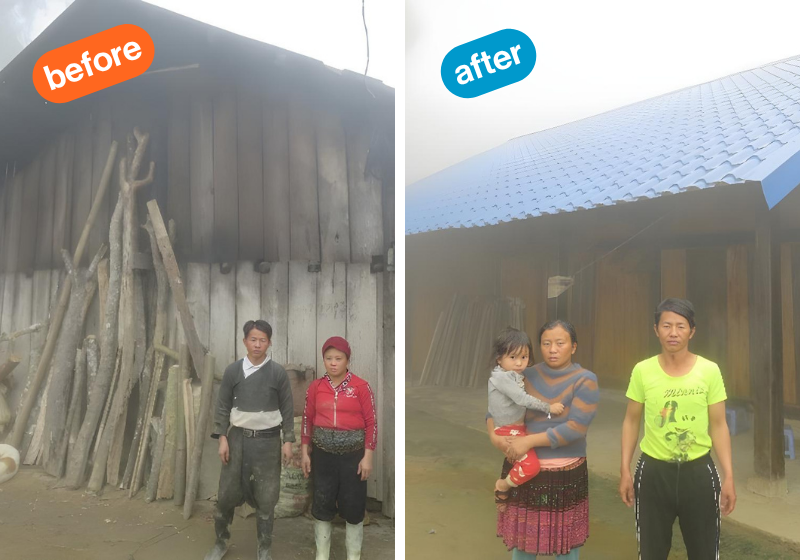
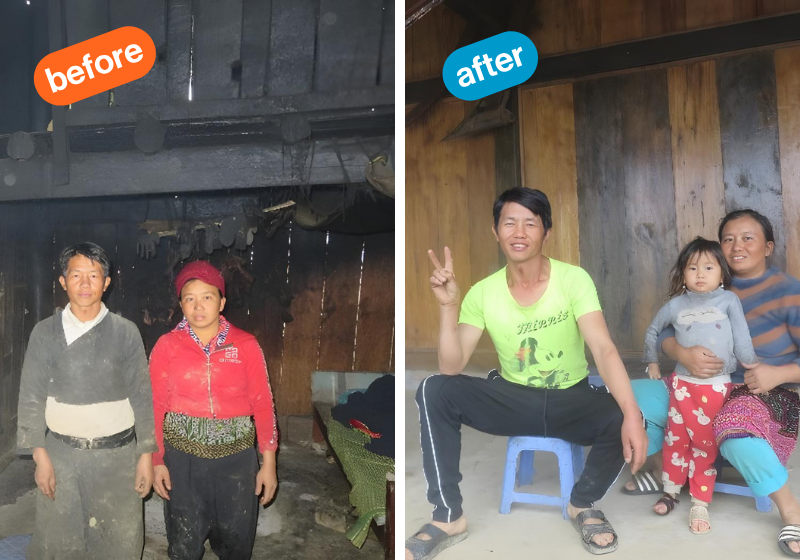
In the remote highlands of Lao Cai province, Giang A Co’s family of eight had spent years in a makeshift wooden house with patched walls and a leaking asbestos roof. Smoke from indoor cooking blackened the walls. Every rainstorm flooded the floor. With his elderly mother, wife, and five children sharing the cramped space, and farm income barely enough to survive, the prospect of improving their home felt out of reach.
When Habitat introduced a housing repair program in the village, Mr. Co was one of the first to register. With financial and technical support from the project, and help from relatives and neighbours, the family spent two months renovating their home. The transformation was significant: a new galvanised steel roof replaced the old asbestos sheets; the floor was raised and cemented; wooden walls were tightly fitted to block cold winds and insects; and the cooking area was moved outside, keeping the interior clean and smoke-free.
The impact went beyond the building itself. The children now have a proper place to study. The eldest son has his own room as he prepares for marriage – something unimaginable before. No longer worried about storms or leaks, the parents can focus on work, and the younger children are healthier.
“Since we have this new house, we feel secure and hopeful for a better future,” Mr. Co shared.
Importantly, the renovation made use of available materials wherever possible, reducing its environmental footprint – a small but meaningful detail in a project focused on long-term resilience.
A turning point: a new home gives hope for the future
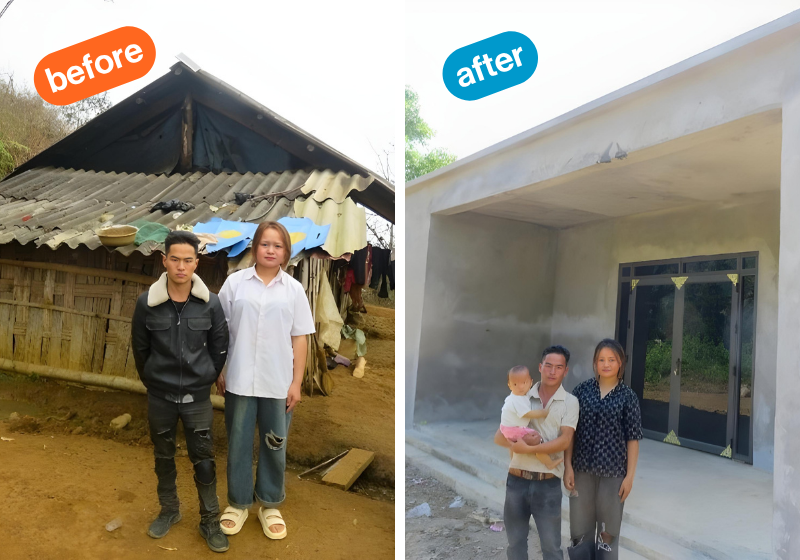
High in the mountains of Ta Phin, every rainy season once felt like a fight for survival for Mr. Sai’s family of five. Their temporary house was a small structure of mixed wood and bamboo with a cracked and patched asbestos roof and stood alone on a steep hillside, accessible only by a narrow dirt path that turned treacherous in wet weather. The cramped space had no proper toilet. Each storm season brought fear of landslides and sleepless nights from leaks. Getting the children to school was difficult; keeping them safe was harder still.
Habitat’s support changed the picture entirely and was more than financial. Technical advice and supervision throughout construction ensured the new home was built safely and to a standard the family could rely on. Mr. Sai made the decision to relocate the house to a flatter site near the main road, making daily life easier and safer for his whole family.
The new home includes a living room, two separate bedrooms providing privacy for women and children, a study corner for the kids, and a galvanised steel roof replacing the old asbestos. For the first time, the family has a clean toilet. This change has made a real difference to their health and dignity.
The results have rippled through every part of family life. The children can get to school more reliably. Mr. Sai, no longer preoccupied with the fear of structural failure each rainy season, can now work away from home with confidence, earning and saving for the future.
“Now that we have a house, I don’t worry as much as before. I can focus on working and giving my children a good education,” he said.
The bigger picture: community-led development extends beyond projects bounds
The stories of Mr. Co and Mr. Sai reflect what the project is achieving at scale across Lao Cai and the southern provinces of An Giang and Kien Giang. To date, the project has completed six new homes and 11 house repairs in Lao Cai alone, alongside 17 household water systems and 15 household latrines, collectively reaching more than 240 people directly.
Tackling the water crisis
Access to clean water remains a critical challenge. In Lao Cai, communities face severe water shortages from March to July each year, historically forcing women and children to collect water from remote streams. In An Giang, 25 households have been selected to receive rainwater harvesting systems, with installation planned for the coming months.
Communities leading their own change
Community leadership is also central to the project’s approach. Through the Participatory Approach for Safe Shelter Awareness (PASSA), communities assess their own risks and develop their own plans, with local authorities, women’s groups and youth taking an active role. In Lao Cai, community members mobilised their own labour and contributed approximately USD 5,000 toward the construction of a shared community house. In An Giang, two new PASSA groups, each with 50% female membership, are already planning community-level water improvements.
Culturally appropriate housing designs developed for H’Mong and Dao communities have been formally approved by local authorities and incorporated into Vietnam’s National Target Program, creating a foundation for wider replication beyond the project.
A foundation for the future
In the first 18 months, Habitat has directly reached more than 800 individuals through construction, training and community activities, with an estimated 1,700 people benefiting indirectly. Innovative financing mechanisms, including a mixed grant-and-loan model and USD 9,412 mobilised from non-Habitat sources, are helping extend the project’s reach further still.
For families like Mr. Co’s and Mr. Sai’s, the impact is already real and lasting. A safe home is not just shelter, it is the foundation for health, education, and hope for the future.
These projects receive support from the Australian Government through the Australian NGO Cooperation Program (ANCP) and are in partnership with our implementing partner Habitat for Humanity Cambodia.
These projects receive support from the Australian Government through the Australian NGO Cooperation Program (ANCP) and are in partnership with our implementing partner Habitat for Humanity Cambodia.