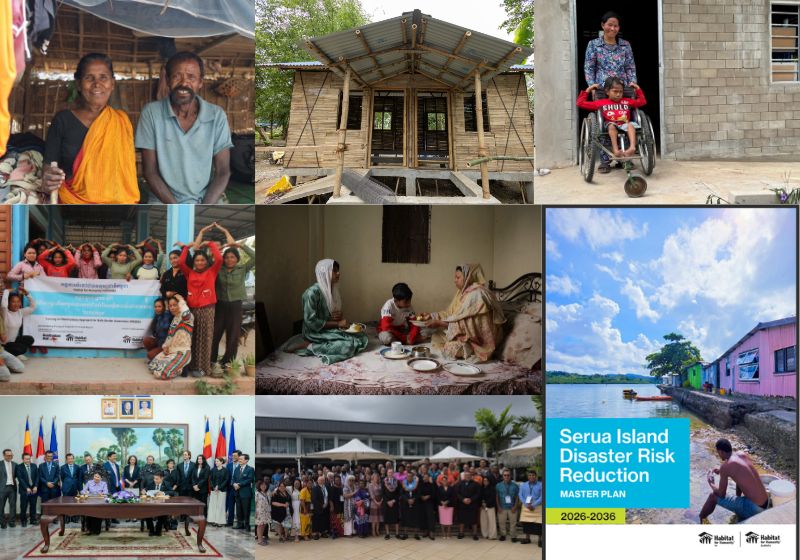
Skip to content Skip to sidebar Skip to footer

15 Years of Impact Across Asia and the Pacific: How Australian Support Helped Transform Housing Systems, Not Just Build Homes


This year, Habitat for Humanity marks 50 years of work around the world, building homes, communities and hope for 62 million people. For Habitat for Humanity Australia, the milestone carries a second anniversary: 15 years of partnership with the Australian Government through the Australian NGO Cooperation Program (ANCP) and our implementing partners.

The scale of the need that this partnership responds to is significant. UN-Habitat’s World Cities Report 2026 estimates that up to 3.4 billion people globally lack access to secure, safe, and adequate housing, with around 1.6 billion of them living in the Asia-Pacific region. More than 1 billion people worldwide currently live in informal settlements and slums, close to 700 million of them in the Asia-Pacific alone. These are the communities at the centre of Habitat for Humanity Australia’s work across the region. 

Over 15 years, that partnership with the ANCP has reached far beyond the construction of housing and community infrastructure across Cambodia, Nepal, Bangladesh, Vietnam, Fiji and Indonesia. It has helped communities prepare for disasters before they strike. It has strengthened local leadership in some of the region’s most vulnerable settlements. It has shaped housing policy, influenced governments, and helped shift housing to a national development priority in the countries we work.

At a time when Australia’s foreign aid is increasingly debated in narrow political terms, the story of Habitat for Humanity Australia’s work across Asia and the Pacific offers a different picture of what long-term Australian investment can achieve: not short-lived projects, but lasting systems change that continues protecting families long after project funding cycles end.

This is the story of how Australian support helped transform housing from a matter of shelter alone, into a foundation for resilience, stability and regional security.

Eastern Nepal Floods 2025

At 2am, the flood warnings started moving through WhatsApp groups in eastern Nepal.

Local community volunteers moved door to door through dark, waterlogged villages, waking elderly residents and helping families evacuate before the river swallowed entire access roads.

For Lukhi, a woman living with a disability, escape would once have been impossible.

“I felt extremely distressed,” she said later. “Who would help me?”

But this time, someone came.

A neighbour guided her to higher ground and then to an emergency shelter where families cooked together, shared food, and waited out one of the worst floods Eastern Nepal had seen in decades.

Not a single person died in the communities that had spent years preparing for exactly this moment.

That preparation was quietly built over the years through an Australian-supported partnership between Habitat for Humanity Australia and country partner Habitat for Humanity Nepal.

This is not just a story about homes. It is a story about how long-term foreign aid support can change systems that save lives.

From Building Houses to Changing Systems

Fifteen years ago, Habitat for Humanity Australia’s work across countries like Cambodia, Bangladesh, Nepal and Vietnam looked very different.

The focus was immediate and urgent: helping families build safer homes, install toilets, access clean water and recover after disasters.

Those interventions mattered. They still do.

But over time, something larger happened.

With long-term support from Australia through the Department of Foreign Affairs and Trade’s ANCP programs, Habitat for Humanity’s work evolved beyond construction-orientated projects into something far more ambitious and effective: helping governments, communities and local organisations build housing systems that could last.

That shift matters because the housing crisis across Asia and the Pacific has never simply been about bricks and mortar. 

Unsafe housing is tied to everything else: climate vulnerability, disease outbreaks, economic insecurity, displacement and political instability.

When families live in disaster-prone settlements without legal protections or basic infrastructure, disasters become deadlier. Recovery becomes slower. Poverty deepens across generations.

Australia’s aid investment increasingly recognises that reality.

Instead of only funding physical housing interventions, long-term support helped strengthen local leadership, improve disaster planning, influence housing policy and build trust and collaboration between communities and governments.

The result is visible today across Cambodia, Nepal, Bangladesh, Vietnam, Fiji, and Indonesia, not only in terms of homes built, but also in systems and relationships that continue to function long after individual projects end.


Nepal: From Emergency Shelter to National Housing Policy

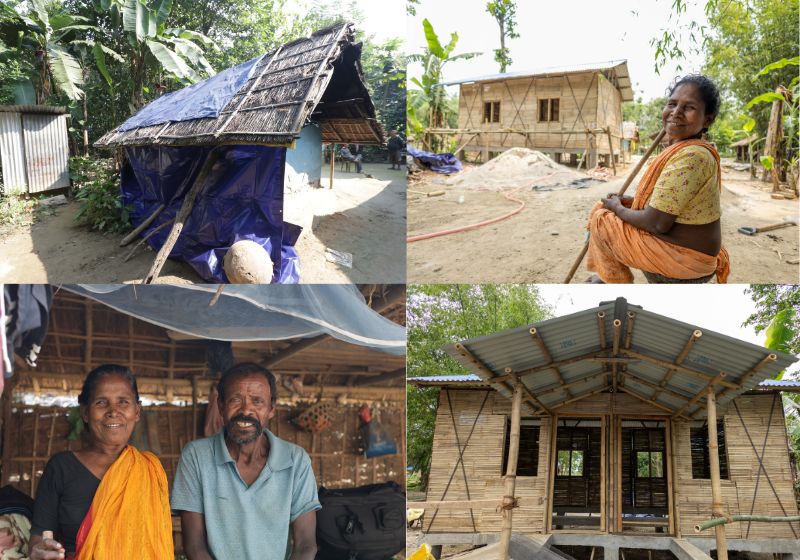
When the October 2025 floods tore through Jhapa in eastern Nepal, Lukhi was standing at the threshold of her home, watching her livelihood wash away in the rising water. She lives with a disability and walks with a wooden stick. The floodwater was rising faster than she could move.

“I felt extremely distressed,” she said later. “Who would I ask for help? Everyone else was suffering that day.”

But Lukhi was not as alone as she feared. A community volunteer, alerted through a network established years earlier by a local disaster management committee, came to her door and assisted her to the pre-established emergency shelter. She spent four days there. The residents cooked together and looked after one another. Nobody was left behind.

What made that escape possible was not luck. It was due to architecture of a different kind: the Community Disaster Management Committees established through Habitat for Humanity Nepal’s long-term facilitation work. When alerts began moving through WhatsApp groups at 2am, those committees were already in motion, coordinating evacuations, disseminating warnings and ensuring vulnerable residents like Lukhi were reached before the water did.

In the weeks that followed, Habitat for Humanity Nepal distributed emergency shelter kits within days of the disaster. With support from the Flood Response Project also supported by Habitat for Humanity Australia, a new home was constructed for Lukhi; not simply a replacement structure, but a purpose-designed transitional shelter built using cement bamboo frame technology. It sits on a raised plinth to significantly reduce future flood risk. Its disability inclusive design supports safe, independent movement by Lukhi. It meets international humanitarian shelter standards and can be upgraded to a permanent shelter that can last more than 35 years. Beneath the raised floor, there is space for her to keep animals and rebuild her livelihood on her own terms.

Her story captures something important: the distance between a house and a home, between shelter and safety, is wider for people living with disabilities. Closing that gap necessitates thinking beyond construction. It requires anticipating who will be hardest to reach, and designing systems, social, financial and physical, that reach them anyway.

Reshaping Housing Finance for Rural Women

Lukhi’s recovery was also made possible in part by something that began years before the flood: a transformation in how rural women in Nepal access finance for housing affordability.

Between 2019 and 2022, Habitat for Humanity Nepal partnered with the Australian Government’s Business Partnerships Platform to expand access to affordable housing loans for low-income communities. Working with local financial institutions, the program helped develop loan products tailored to the realities of rural women’s lives, including irregular incomes and limited access to formal banking services. As a result, tens of thousands of families were able to access financing to improve, repair, or build safer homes in Nepal.

The impact extended well beyond the life of the initial partnership. Habitat for Humanity Nepal continued working with financial institutions to strengthen and expand housing finance services, helping make housing loans a more established and accessible option for rural families. What began as a specialised product evolved into a mainstream offering, embedded within the financial institutions themselves and continuing to reach new households independently.

Today, that work continues to evolve. Financial literacy programs, clean energy financing, and insurance products are being integrated into housing finance services in Nepal, while women’s savings groups help connect rural families to the formal financial system. Together, these efforts are creating more pathways to resilience and opportunity. Access to finance is no longer the barrier it once was. The system has changed.

Lukhi’s new home was also built using treated bamboo, which points to a broader shift in Nepal’s construction sector.

For generations, bamboo was widely used in housing but remained outside formal building standards, making it difficult to finance, insure or certify. With support from the Australian Government and other supporters, Habitat for Humanity Nepal helped test and demonstrate bamboo-based construction as a safe, resilient and low-carbon alternative.

In 2025, the Nepal Government formally endorsed national guidelines for bamboo construction, recognising bamboo as a legitimate building material within the country’s housing system. The policy is now helping shape how homes are built across Nepal, more affordably, more sustainably and with greater resilience.

Nepal’s story, community disaster committees saving lives, housing finance reaching rural families, and bamboo moving from informal practice to national policy, is a story about what happens when foreign aid is patient enough to take effect at the level of systems. Lukhi’s new home is one outcome of that investment. The framework that will help protect thousands of homes after the next flood is another.

Cambodia: Where a Small Housing Project Became National Policy Influence


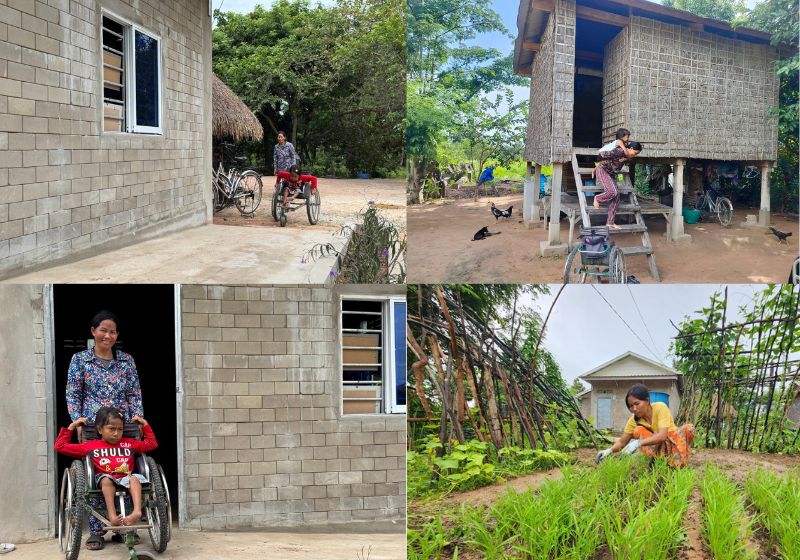
In rural Siem Reap, a mother named Ms. Mom spent years carrying her daughter in and out of their home because her wheelchair could not fit through the doorway.

Their house was small, precarious and unsafe. During storms, rain leaked through the roof. Movement inside was very difficult. Privacy barely existed.

Today, her daughter moves independently through a brick home designed for accessibility and safety.

The change transformed the family’s life.

Ms. Mom now spends more time growing vegetables and raising chickens because she no longer has to physically carry her daughter throughout the day. Her daughter can now prepare for school on her own.

It is a deeply personal story. But it also reflects a much bigger transformation underway in Cambodia.

When Habitat for Humanity Australia and Habitat for Humanity Cambodia first began working there in the early 2000s, the country faced enormous housing challenges after decades of conflict, rapid urbanisation and weak infrastructure. Many low-income families lacked secure land, durable housing or access to affordable finance.

Habitat’s early work focused on direct community support alone: small housing loans, sanitation improvements and community infrastructure.

Over two decades, Australian Government-backed investment has allowed that preliminary work to grow far beyond individual projects.

Community savings groups expanded. Women-led resilience groups formed. Local residents organised to improve roads, drainage and flood preparedness. Relationships with government ministries deepened over the years of consistent engagement.

Today, Habitat for Humanity Cambodia is increasingly treated as a trusted technical partner helping shape the Cambodian Government’s social and affordable housing agenda.

That evolution represents one of the clearest examples of how long-term aid investment creates influence for impact that short funding cycles rarely achieve in isolation.

From Advocacy to Law: Influencing National Housing Policy in Cambodia


In Cambodia, Habitat for Humanity Cambodia’s advocacy has helped secure one of the country’s most significant housing policy reforms in a decade. Working alongside the General Department of Housing (GDH) under the Ministry of Land Management, Urban Planning and Construction (MLMUPC), as well as the General Department of Public-Private Partnerships (GD PPP) under the Ministry of Economy and Finance (MEF), Habitat for Humanity Cambodia co-produced research that underpinned a revision of Cambodia’s 2017 Policy on Promoting and Establishing a National Program for Affordable Housing Development. 


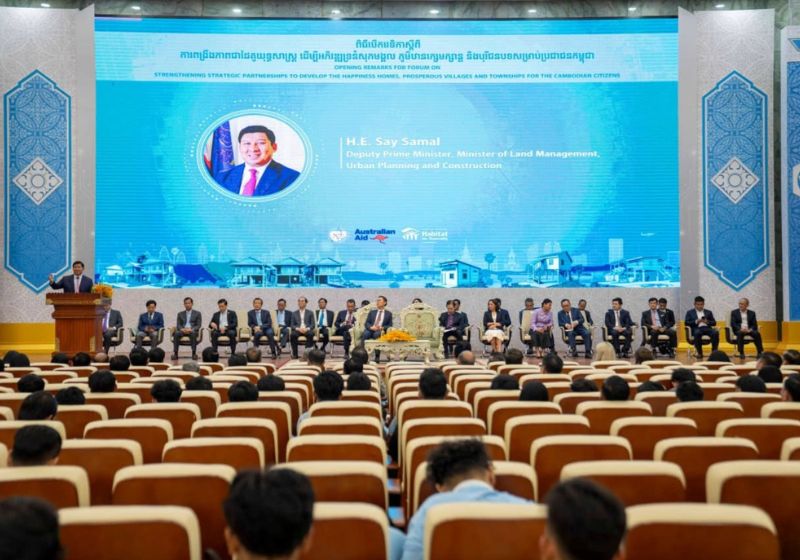
Caption: The Opening Remark of the Minister in the Forum on Strengthening Strategic Parntership on Develop the Happiness Homes, Prosperous Villages and Townships

This resulted in the Policy on Development of Social and Affordable Housing being approved by the Royal Government of Cambodia in February 2026, launched the following month. It replaces the prior framework, which excluded smaller developers, NGOs, and community organisations through a 100-unit minimum threshold, with a restructured approach built around three housing categories:social housing; affordable ownership; and affordable rental, which for the first time opened a formal legal pathway to secure land tenure for residents of informal settlements.

Several of the policy’s key achievements trace directly back to Habitat for Humanity Cambodia’s advocacy, made possible by modest but sustained aid support from the Australian Government through Habitat for Humanity Australia. The removal of the 100-unit minimum threshold now allows organisations to support projects at the scale of informal settlements, as small as 10 to 15 households. The introduction of standardised legal definitions for informal settlement residents, vulnerable populations, and low-income groups closes a long-standing gap, giving land tenure-insecure households a recognised legal status and a clear basis to claim protections.


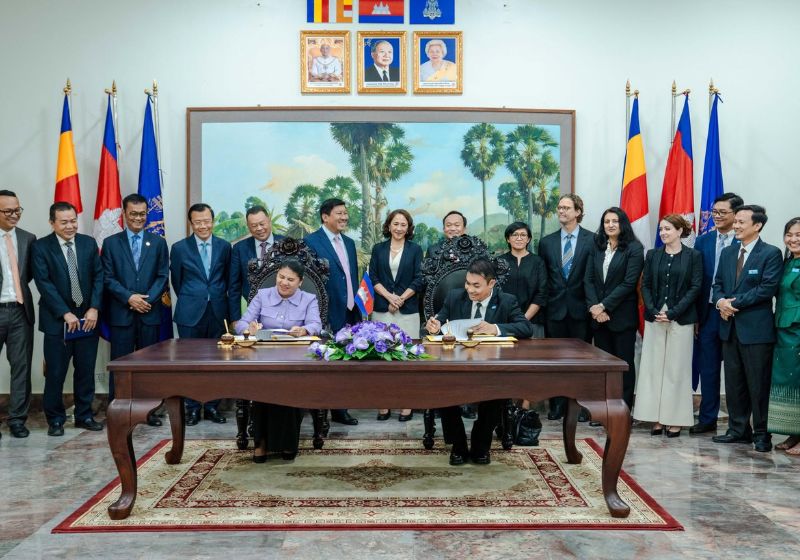
Caption: MoU Signing between Habitat Cambodia and Ministry of Land Management, Urban Planning, and Construction

NGOs and development partners can now officially apply to run housing projects at the commune and village level in Cambodia, reaching communities that the formal housing market previously left behind. The policy also incorporates climate-resilient construction criteria, including renewable energy use and low-emissions materials, as part of incentive eligibility, opening a pathway to climate finance alongside conventional housing investment. Beyond the policy text itself, Habitat for Humanity Cambodia secured direct engagement with Cambodia’s Deputy Prime Minister and co-established a National NGO Housing Network with UN-Habitat Cambodia, consolidating civil society voices into the policy development process. Three pilot projects launched alongside the policy are projected to benefit hundreds of families in Battambang, Siem Reap, and Phnom Penh, with Habitat for Humanity Cambodia providing technical assistance and coordination to two of the three.

Bangladesh: Women Leading Change in Dhaka’s Informal Settlements

In a densely packed settlement in northwest Dhaka, fire spreads fast.

Homes sit pressed against one another, built from fragile materials and threaded with unsafe electrical wiring. One spark can destroy hundreds of lives overnight.

When a fire tore through the community in 2023, women like Sumi helped coordinate the response, evacuating families, organising emergency supplies and supporting displaced neighbours.

Years earlier, very few women in the settlement held leadership roles.

Now many women lead local disaster groups, negotiate with city authorities and organise sanitation and emergency response systems inside their communities.

“If we go alone, they don’t listen,” Sumi said. “If we go together, they listen.”

That confidence came through years of community organising supported through Australian-funded resilience programs.

The work improved water access, sanitation and disaster preparedness. But its deeper impact was social and systemic.

Women became decision-makers inside neighbourhoods where they had previously been excluded from public leadership. Communities developed stronger relationships with local authorities as a result. Residents gained enough security to begin investing in improving their own homes and community infrastructure.

And critically, those community groups continue operating years after project funding ended.

That sustainability is one of the strongest indicators that systems, not just structures, were changing.

Vietnam: Communities Building Their Own Resilience

In southern Vietnam, residents of two villages depended on a deteriorating access bridge that regularly flooded and left families isolated.

Instead of waiting for outside contractors, local residents organised themselves.

Families contributed labour, food and materials. Together, they built a new bridge strong enough to reconnect the community during storms and flooding.

Elsewhere, communities built flood warning systems linked directly to hydroelectric plants upstream. In another province, residents constructed a shared water tower after identifying chronic water shortages particularly affecting women and girls.

These projects were not imposed externally. They emerged through long-term community-led planning supported through Australian-funded resilience programs over time.

That distinction matters. The most sustainable development work is rarely the most visible. It is the work that communities continue after outside organisations leave.

In Vietnam, local ownership became the model rather than the by-product of a broken system.

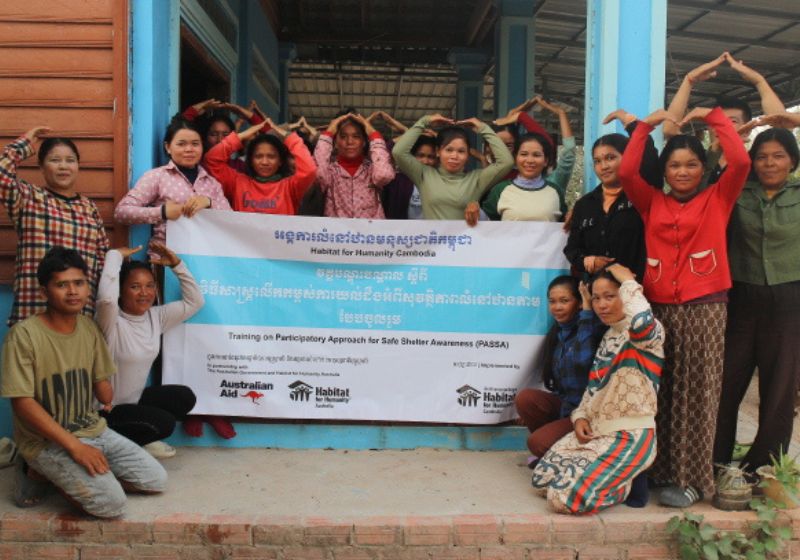
In Lao Cai province, the same community-led model transformed Giang A Lenh’s daily life, a member of the H’Mong ethnic group, after he participated in Habitat for Humanity Vietnam’s PASSA process, a structured approach to identifying hazards and developing local action plans for safer housing and settlements. Where his home once stood beside a scattered pig pen and untreated animal waste, Lenh built an organic compost pit, turning daily waste into fertiliser for his livestock feed and a new source of income from selling surplus to local agricultural teams. His example, now shared through community learning visits, has encouraged neighbouring households to adopt the same low-cost model to tackle pollution linked to free-grazing cattle. 

In Kien Giang province, the same PASSA process saw more than 900 households across two villages come together to replace a collapsing footbridge that had caused years of falls, lost livelihoods and dangerous evacuations during the rainy season. “We collectively agreed to pool resources for the construction,” said Ms Tuoi, a member of the local PASSA group, describing 45 days of community-contributed labour, food and materials that, together with support from Habitat for Humanity Vietnam and local government, delivered a new 30-metre bridge now crossed by up to 300 people and vehicles every day.

That same DFAT-supported program also reaches families that the market and public services routinely miss. In Den Sang commune, one of the poorest areas of Lao Cai province, Giang A Co’s family of eight had lived for years in a smoke-blackened wooden house with a leaking asbestos roof and no toilet. With financial and technical support from the project, and help from relatives and neighbours, the family spent two months rebuilding a new steel roof, a raised cement floor, and a cooking area moved outside. “Since we have this new house, we feel secure and hopeful for a better future,” Mr Co said. Nearby, in Ta Trang and Mr Vui A San faced even steeper odds: living with epilepsy, and his wife with an intellectual disability, the couple had little means to earn an income or contribute labour, and their fragile bamboo home was left further damaged after Typhoon Yagi. Local builders and village volunteers, mobilised by commune authorities and supported with donated materials, rebuilt the family’s home in just over a month. “Without this generous support, we could never have built such a home in our lifetime,” Mr San said.

Fiji: Building Regional Trust, One Partnership at a Time

Over the past ten years, the Australian Government has provided support to Habitat for Humanity Fiji through the ANCP, the Australian Humanitarian Partnership (AHP) Disaster Ready Program and the DFAT Water for Women Fund. This has helped shift Habitat for Humanity Fiji’s work from small, localised housing projects into region-shaping partnerships. 

With DFAT support, Habitat for Humanity Fiji led the development of the Fiji Shelter Handbook: Inclusive and Accessible Shelter Planning for Fijian Communities, recognised as the first resource of its kind in the Pacific and now a living document used by the Fiji Shelter Cluster to speed up coordinated disaster response. That same model was adapted in Vanuatu and the Solomon Islands, extending Fiji’s influence beyond its own borders and cementing the value of Habitat for Humanity Fiji’s position as Fiji Shelter Cluster Co-Lead together with Government.

The Water for Women project supported by DFAT in Fiji stands as a clear demonstration of how the Australian government’s support for development programs produces longer term impacts and sustained changes in people’s lives and community mindsets. In just 4.5 years, the partnership reached 980 households across 18 communities in Ra and Ba provinces, along with 1,140 children and 69 teachers across 11 primary schools, improving access to water and sanitation infrastructure while embedding it within stronger local governance. More than 1,700 community members took part in engagement activities that placed women, youth and people with disabilities at the centre of decision-making on WASH issues long dominated by men, with each community developing its own Water Safety Plan to identify risks and prioritise infrastructure needs. The result is measurable behavioural change, from increased handwashing and household water treatment to a shift in how men and women in these communities see women’s roles: not as passive recipients of aid, but as agents of change in their own right. That shift in mindset, as much as the infrastructure itself, is the kind of durable outcome that sustained Australian investment in Fiji continues to produce. 

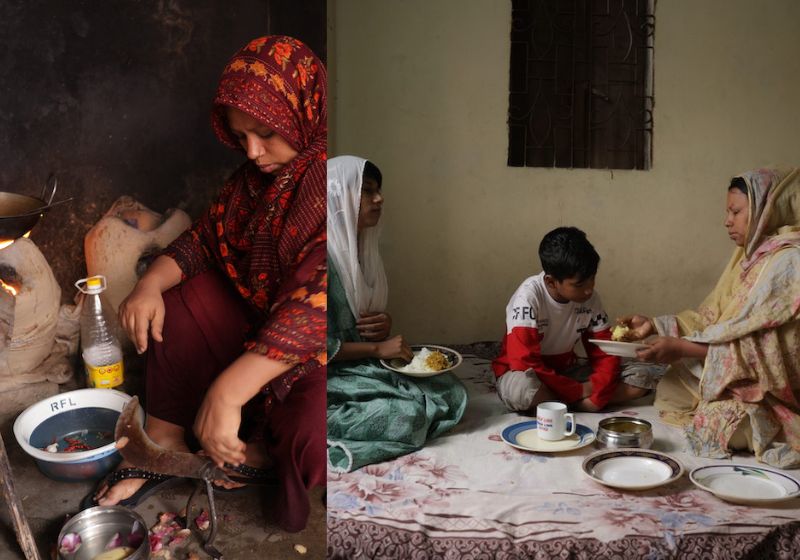
In Narikoso Village, Kadavu, rising seas and storm surges have already forced families to relocate to higher ground, making it one of Fiji’s clearest examples of climate-driven displacement. With support from Australia’s foreign aid, Habitat for Humanity Fiji built kitchens for seven new relocation homes, restoring family well-being and a sense of normalcy after the move. The partnership went further than infrastructure, delivering basic plumbing training to twelve local women, including community member Siteri, so they could maintain household water systems and challenge traditional norms around technical work. The results have been tangible: Siteri went on to independently install a water system for a temporary cooking shelter, and now supports her household with skills and confidence she didn’t have before. Narikoso shows that successful climate relocation isn’t just about moving communities to safety, it’s about investing in people, strengthening local capacity, and empowering women as leaders in building resilient communities. 

The credibility that Habitat for Humanity has been able to establish through this type of demonstrative programming and expertise has translated into direct government partnerships that enable broader systemic changes in Fiji. A range of Fiji government ministries have sought to enter into Memorandums of Understanding with Habitat for Humanity Fiji , including the Ministry of Housing and the Ministry of Women, relationships built in part on the trust earned through sustained Australian and New Zealand-funded programming. 


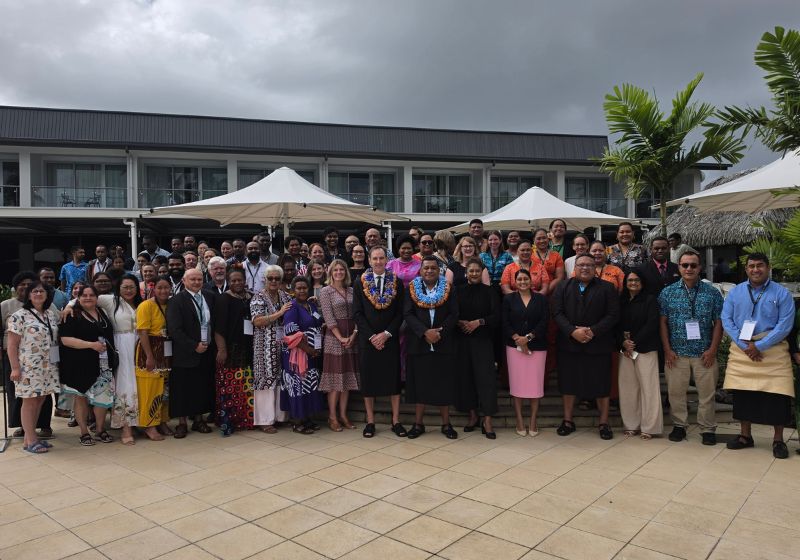
Caption: The Pacific Housing Forum 2026

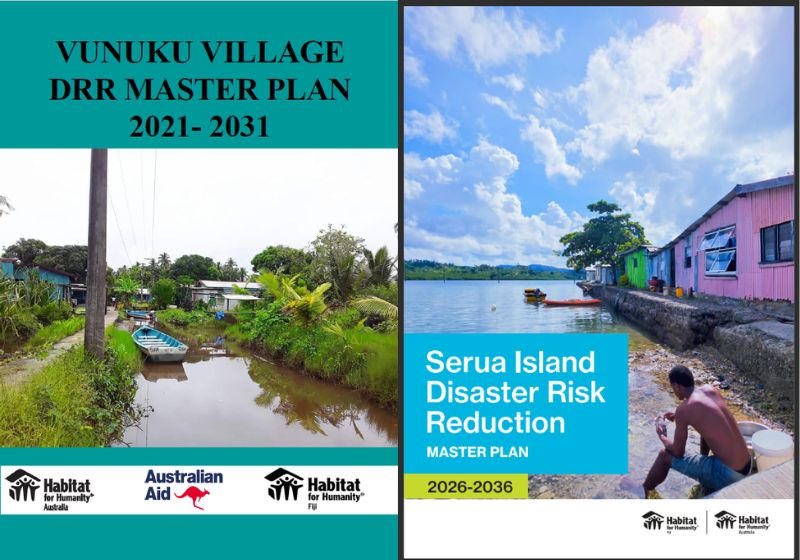
Locally led Disaster Risk Reduction Masterplanning projects in Vunuku and Serua were developed to meet Fiji Government policy requirements for community development planning, to show how support has evolved from emergency response toward community-owned, long-term resilience planning. For DFAT, whose strategic focus on the Pacific continues to intensify, Fiji stands as a clear example of how sustained aid investment builds not just infrastructure, but the institutional relationships that underpin regional stability.

Why Australia’s Support Matters

Foreign aid is often debated in Australia in abstract terms: budgets, diplomacy, strategy. But on the ground, its impact is tangible.

It determines whether families survive floods. Whether children can safely sleep through storms. Whether women have a voice in how their communities are run. Whether governments adopt housing policies that protect vulnerable people instead of ignoring them.

Over the past 15 years, Habitat for Humanity Australia’s partnership with the Australian Government in particular through the Australian NGO Cooperation Program (ANCP), together with our implementing country partners, has delivered something essential in international development: continuity.

That continuity allowed local trust to deepen. It allowed governments to engage over years rather than months. It allowed communities to prepare for disasters before emergencies arrived.

And it allowed organisations like Habitat for Humanity Cambodia to evolve from delivering individual projects into helping shape national housing conversations and policy.

Short-term aid can produce immediate results.

Longer-term aid can reshape institutions.

That distinction sits at the heart of this story.

Why Housing Matters for Regional Stability

Housing is often treated as a secondary issue in international development policy.

In reality, it sits underneath almost every major challenge facing the Asia-Pacific.

Families without safe housing are more vulnerable to climate disasters, disease, economic shocks and displacement. Communities without resilient infrastructure recover more slowly after crises. Governments struggling to manage rapid urbanisation face growing instability.

As climate pressures intensify across the region, housing resilience is becoming inseparable from economic resilience and regional security.

Australia’s investment in safer housing across countries like Cambodia, Nepal, Bangladesh, Vietnam and Fiji is therefore not simply humanitarian. It is strategic for Australia’s own well-being.

Stable communities are better able to withstand disasters, maintain livelihoods and economic development, and avoid population displacement that increasingly ripple across national borders.

The long-term impact of foreign aid for housing is not only measured in  infrastructure delivered.

It is measured in whether societies and countries become more resilient and self-sustaining over time.

The Proof of Long-Term Impact

Perhaps the clearest sign of Habitat for Humanity Australia’s influence today is that governments increasingly want the organisation at the table.

In Cambodia, Habitat for Humanity is now involved in national conversations about affordable housing standards and urban development.

That level of influence did not emerge from a single project.

It was built over decades of consistent engagement, local partnership and demonstrated results, backed by longer-term Australian Government support.

The significance extends beyond Cambodia.

Across Asia and the Pacific, Habitat for Humanity Australia’s work increasingly continues through local institutions, government systems and community leadership structures long after individual funding cycles finish.

That is what sustainable impact looks like.

Not dependence, not temporary projects in isolation but systems capable of continuing without needing constant outside intervention. After 25 years, that is the strongest argument for why long-term foreign aid still matters.

These projects receive support from the Australian Government through the Australian NGO Cooperation Program (ANCP) and are in partnership with our implementing Habitat for Humanity partners.

About Habitat for Humanity

Habitat for Humanity is a movement of people in your local area and around the world, working together to build more prosperous and vibrant communities by making sure everyone has a safe, affordable place to call home. Since the founding of Habitat for Humanity in 1976 in the USA, together, we have helped more than 65 million people globally build their futures on their own terms through access to decent housing. We’ve done that by working alongside people of all walks of life to build, repair and finance their homes, by innovating new ways of building and financing, and by advocating for policies that make constructing and accessing housing easier for everyone. Together, we build homes, communities and hope. To learn more, visit habitat.org.au

Habitat for Humanity Australia acknowledges the Traditional Owners of the country on which we work, the peoples of the Eora Nation, and recognises their continuing connection to land, water, and culture. We pay our respects to their Elders past, present and emerging. We respectfully acknowledge the traditional owners of the lands and waters of Australia. 

keep in touch

keep in touch

Habitat for Humanity Australia acknowledges the Traditional Owners of the country on which we work, the peoples of the Eora Nation, and recognises their continuing connection to land, water, and culture. We pay our respects to their Elders past, present and emerging. We respectfully acknowledge the traditional owners of the lands and waters of Australia. 

We are endorsed by the Australian Taxation Office as a Deductible Gift Recipient with charity status. Donations of $2 or more are tax deductible. Habitat for Humanity is accredited by the Australian Department of Foreign Affairs and Trade (DFAT), responsible for managing the Australian Government’s development program. Habitat for Humanity Australia receives support through the Australian NGO Cooperation Program (ANCP).

Habitat For Humanity Australia ABN: 29 131 976 004
Habitat for Humanity Australia – copyright 2026