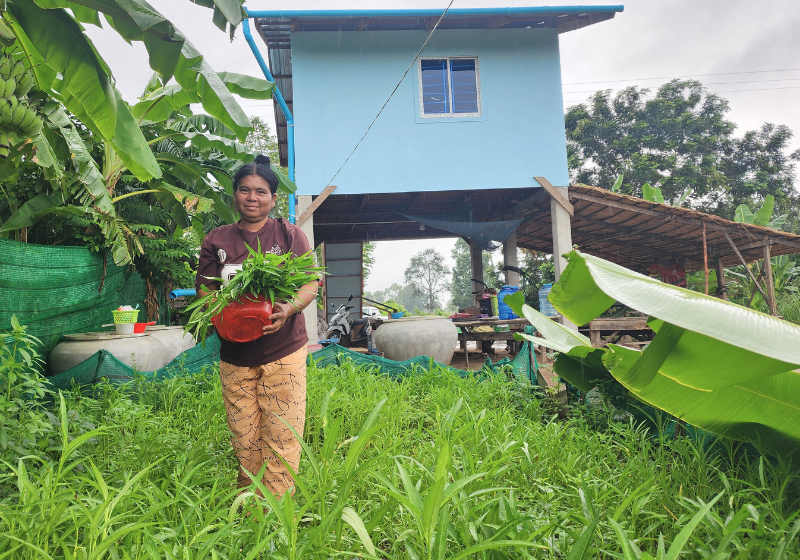
Mrs. Sa’s story
Home is the foundation on which we build our lives. For Mrs. Sa and her family in Cambodia, that foundation is now real
A home that couldn’t keep the rain out
Mrs. Sa and her husband, Mr. Chheuy, live in a rural village in Siem Reap province. For many years, the family lived in a small, unsafe wooden shelter measuring three by three metres, with no proper walls, windows, or door. The roof, made of old metal sheets, leaked during storms, making it difficult for the family to sleep, especially during heavy rain and strong winds.
Because they relied on irregular construction work, the couple believed they would never be able to afford a new home. Their unstable income kept them trapped in substandard living conditions with no realistic way to improve their situation.
Identified. Supported. Not forgotten.
Recognising their hardship, the local PASSA (Participatory Approach to Safe Shelter Awareness) group identified the family as a priority for housing support.
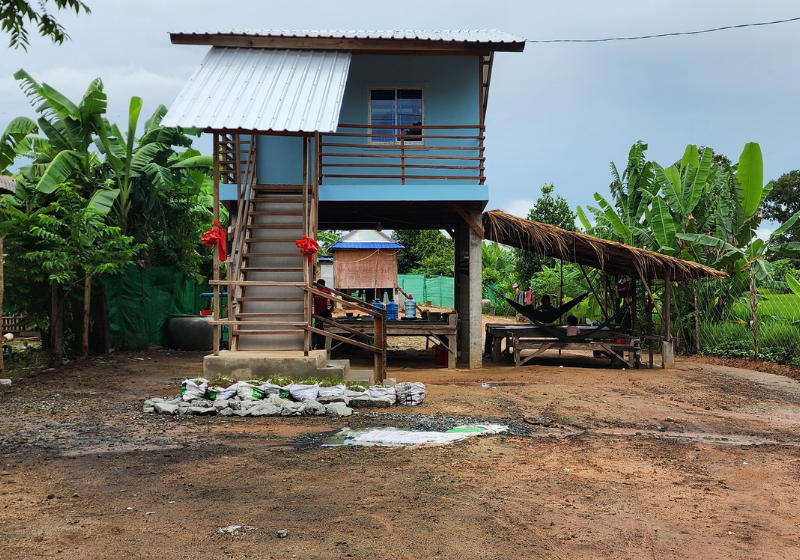
In June 2025, the construction of their new home was completed, along with a small grant to support livelihood activities. Overwhelmed with joy, Mrs. Sa shared:
“I am thrilled and never hoped to have a decent home. A decent place is more than shelter; it includes dignity and security. My children can now access a better education and learn for a better future.”
Building opportunity alongside a home
Every safe, affordable home sparks wider change, and for Mrs. Sa’s family, that change extended well beyond four walls.
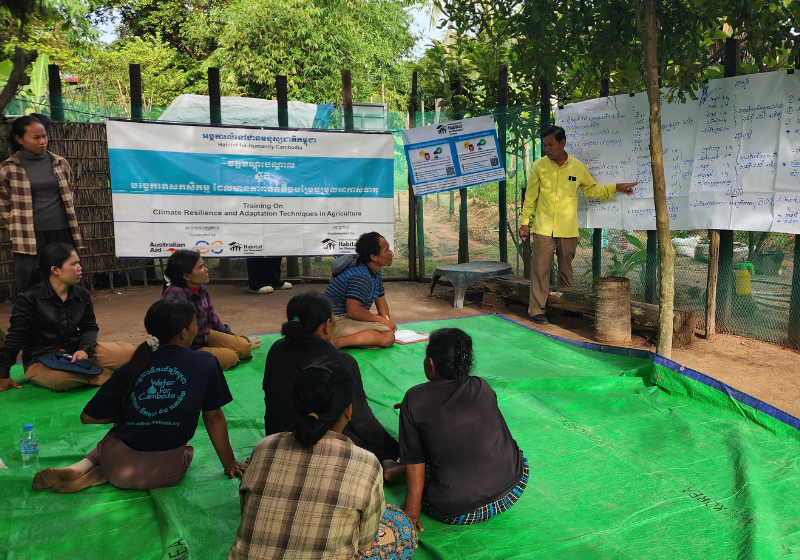
Through a partnership with the District Office of Agriculture and close collaboration with the local agricultural focal person, Mrs. Sa and other families received climate-smart agriculture training and developed business plans. Small grants to strengthen income-generating activities were provided alongside regular household monitoring and coaching sessions, ensuring families could apply what they learned effectively.
A green garden, a growing future
With the project’s support, Mrs. Sa invested her USD 350 livelihood grant to expand her farming activities. She proudly shared:
“Now I have a green home garden around my house. My husband no longer needs to migrate to work outside the province. My home-based agricultural products can provide fresh vegetables for my family consumption and earn from 8,000 to 15,000 riel per day (around USD 2–USD 3.75) from selling the surplus.”
The income from vegetable sales now helps cover daily needs including food, clothing, and school expenses, while also allowing the family to save for emergencies.
Together, we build homes, communities and hope
Mrs. Sa’s family expressed heartfelt gratitude to the PASSA group, Habitat for Humanity Cambodia, and Habitat for Humanity Australia for transforming their lives.
Mrs. Sa concluded: “Your help has changed our lives. I hope many more families can have the same positive changes as me.”
Learn more about our programs overseas.
These projects receive support from the Australian Government through the Australian NGO Cooperation Program (ANCP) and are in partnership with our implementing partner Habitat for Humanity Cambodia.