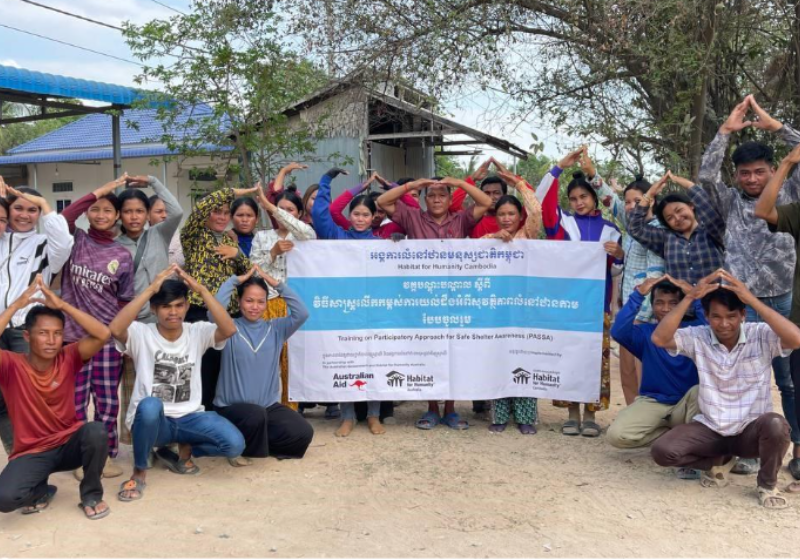
Building Resilience in Rural Cambodia
A small rural village not far from Angkor Thom District Hall is the home to 338 families and 1,345 residents – including 621 women and 30 people living with disabilities.
The local economy is largely driven by rice farming, crop cultivation, livestock raising, and seasonal labour. Many residents also migrate to Thailand for work, while others run small businesses, work in public service, or are employed by microfinance institutions.
Facing the Challenges of Climate and Infrastructure
Village Chief, Mr Hors Poung Toek highlighted the lack of stable employment and infrastructure as key barriers to economic growth and wellbeing. “We don’t have stable jobs in the village or nearby besides seasonal farming activities,” he said. “The community has inadequate infrastructure for livelihood or economic improvement, which significantly affects our overall wellbeing.”
Recurring natural disasters – including floods, droughts, strong winds, and pest infestations have further impacted agricultural productivity, human health, livestock, and housing. Vichet, a local villager, shared a personal story:
“My villagers and I stayed close by the village to take care of our paddy for two nights. When we returned from harvesting rice last year, we couldn’t go directly home, even though it’s in the same village, because there was no road access. It was very difficult for us.”
A Community-Led Solution: The PASSA Group
Previously, disaster response in Poung Toek was handled by individual households, with limited support from local authorities. Recognising the need for a more coordinated approach, Habitat for Humanity Cambodia selected Poung Toek as a site for its BUILD Gender Inclusive Approach to Shelter and Resilience Building project.
As part of this initiative, a women-led PASSA (Participatory Approach for Safe Shelter Awareness) group was formed. The community elected a 25-member committee, led by a woman, to identify challenges, propose solutions, and drive local development.
Together with local authorities, the PASSA group developed a community plan and successfully implemented a micro proposal to construct a 3,500-metre-long, 5-metre-wide road through the village.
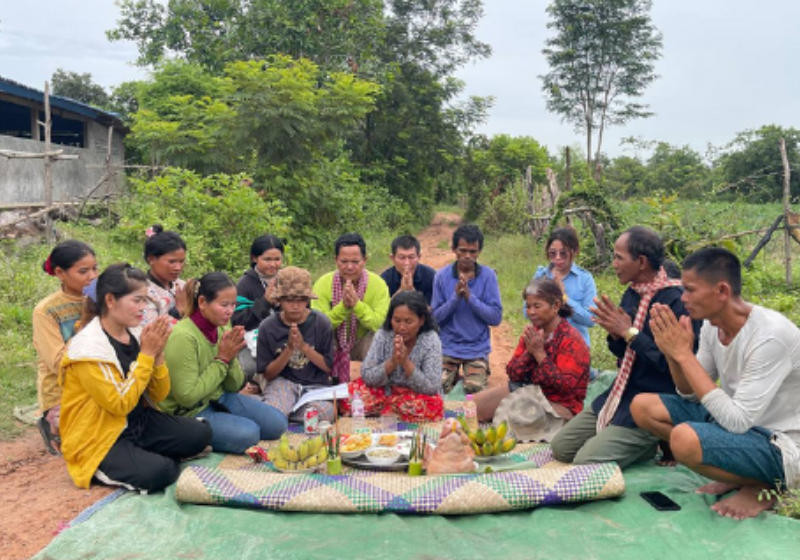
Improving Access and Livelihoods
PASSA group leader Ms Thai explained the process:
“We collaborated with the PASSA group to identify a community-related issue and developed a community plan, resource mobilisation, implementation, as well as monitoring and evaluation. We prioritised road construction because it was very difficult for us in the past without proper access roads.”
The new road has dramatically improved mobility and access for villagers, especially women. It enables easier transport of agricultural goods and reduces travel time and fuel costs. The project directly benefits 267 households (1,346 people, including 621 women) and indirectly supports 270 households outside the village (1,080 people, including 648 women).
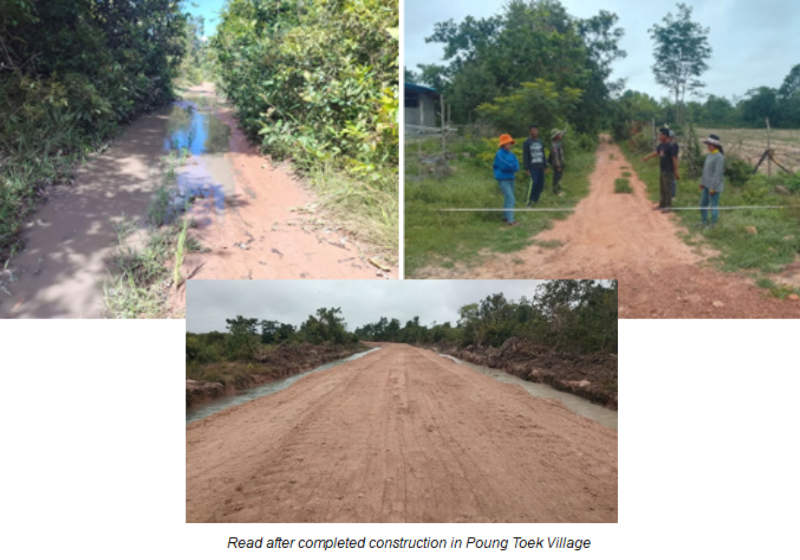
Connecting Communities and Reducing Isolation
The road also serves as a vital link between Angkor Thom and Angkor Chum Districts, improving regional connectivity. Chob Ta Trav Commune Leader Mr Chhong noted:
“The main challenges faced by the villagers were the lack of a direct road connecting to Angkor Chum District and access to the rice field. We used to spend more gasoline and time going back and forth. The new road has made a significant improvement – it helps villagers travel easily, save time, and makes agricultural activities more accessible.”
Looking Ahead: Sustainability and Community Ownership
The success of the road construction has inspired a strong sense of ownership and pride within the community. PASSA leader Ms Thai shared:
“We appreciate our achievement for the first start of our PASSA committee. We will try our best to mobilise community people, as well as local authorities and stakeholders, to ensure that the road built will be properly maintained. Finally, on behalf of the community in Poung Toek, I would like to thank Habitat Cambodia and the donor for your kind support. Wish you all the best.”
This is the power of purpose-led partnerships overseas, and the importance of empowering communities to establish solutions for their needs. Women are leading the way, mobilising advocacy and change for a better future.
Learn more about our programs overseas.
These projects receive support from the Australian Government through the Australian NGO Cooperation Program (ANCP) and are in partnership with our implementing partner Habitat for Humanity Cambodia.